A 10-point guide to what you should check when choosing a serviced apartment in District 3, from location and amenities to contracts and costs, for professionals on long stays in Ho Chi Minh City.
Table of Contents
District 3 serviced apartments: why you need a checklist before deciding
District 3 is one of the most sought-after areas among foreign professionals in Ho Chi Minh City, thanks to its central location, easy-to-navigate streets and comfortable pace of life. Choosing a District 3 serviced apartment, however, takes more than browsing a few attractive photos. You need a clear checklist so you do not overlook details that directly affect your quality of life for months to come.
This article brings together the 10 most important points Luva Travel recommends checking before you sign a contract. The checklist is built on our experience operating serviced apartments in District 1, District 3 and Thu Thiem, and is designed for international professionals, expat families and companies booking accommodation for project teams.
Keep this checklist with you when you view apartments. It gives you a systematic view instead of being swayed by beautiful furniture, and more importantly, it helps you avoid unnecessary extra costs. If you are new to this type of accommodation, read our explainer on what a serviced apartment is to get the fundamentals before diving into each criterion.
District 3 location and how well the apartment is connected
Location is the first criterion and often the most decisive. A good District 3 serviced apartment should be close to your workplace, near an international school if you have young children, and convenient for getting into central District 1 or out to Tan Son Nhat Airport.
Try the actual commute at rush hour instead of only looking at a map. Travel times by motorbike and by car in Ho Chi Minh City vary widely, and a route that looks short can take a long time in the morning. If you regularly host international clients, the distance to Grade A office buildings in District 1 is also worth considering.
District 3 benefits from many quiet, tree-lined inner streets and countless quality restaurants and cafes. This is a big plus for professionals who want to balance work and relaxation. When comparing apartments, also note the walking time to the nearest supermarket, pharmacy and gym, since these needs come up every week.
Luva Travel has apartments in District 3 in its portfolio, including the modern “District 3 Modern Nest”. You can browse the full portfolio on the Luva Travel apartments and villas page to compare the location of each unit before booking an in-person viewing.
Size and layout that fit your family’s needs
Size and layout determine how comfortable you will be over a long stay. For a single person, a one-bedroom apartment is enough. But for families with young children or people who often work from home, you should plan for a second bedroom or a dedicated workspace.
In the Luva Travel portfolio, two popular layouts are a 75 square meter apartment with 2 bedrooms and 2 bathrooms, and a 60 square meter apartment with 2 bedrooms and 1 bathroom. Both offer enough space for a small family, but each layout is different: pay attention to the orientation of the bedrooms, the position of the bathroom and how well ventilated the kitchen is.
A handy tip is to bring a tape measure to viewings. Measure door widths, free space in the bedrooms and the height of kitchen cabinets to make sure your personal belongings will fit. Do not hesitate to ask the operator about adjustments, such as adding a desk or shelving, as many reputable operators are happy to accommodate.
In-apartment amenities to check
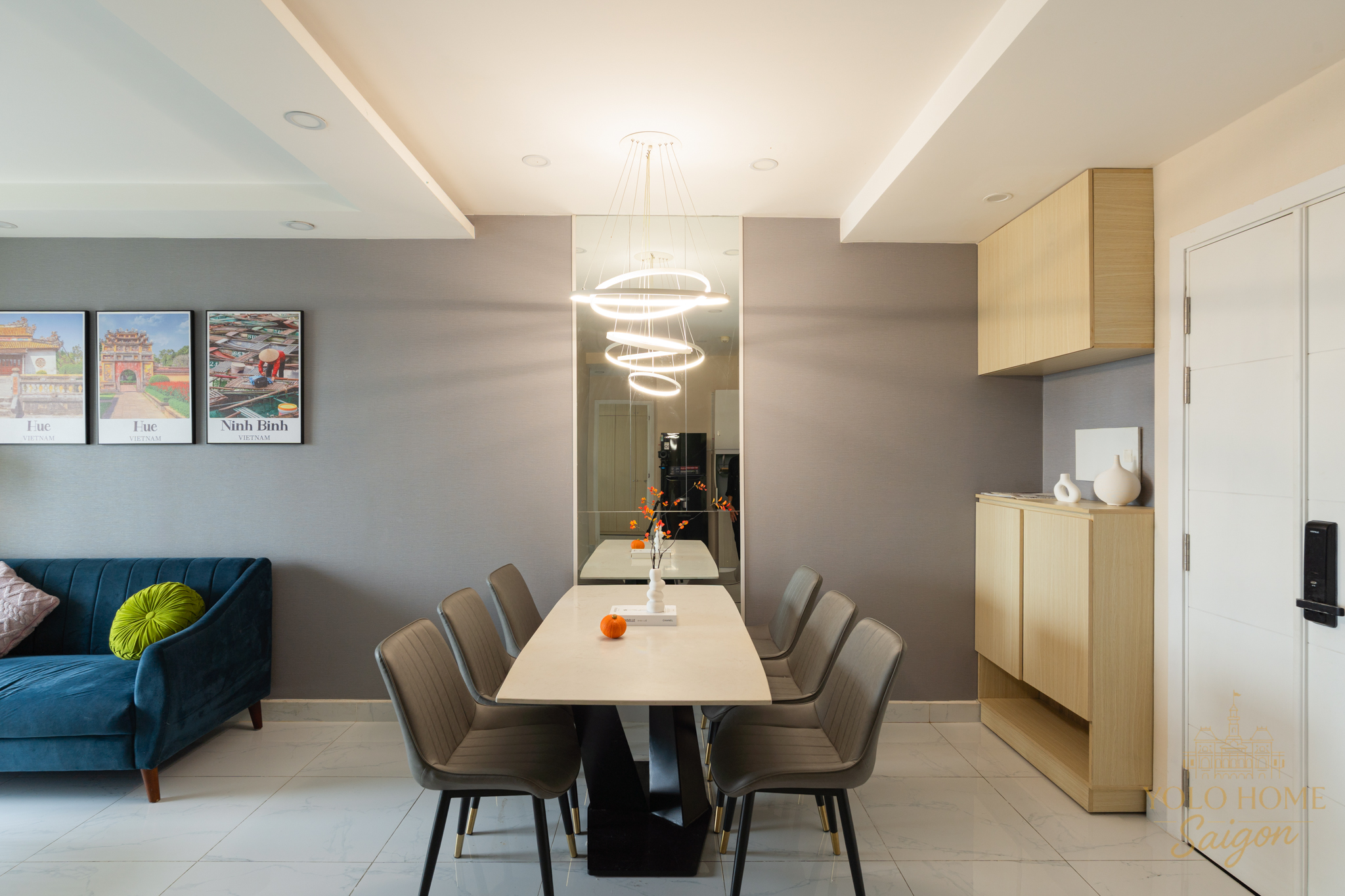
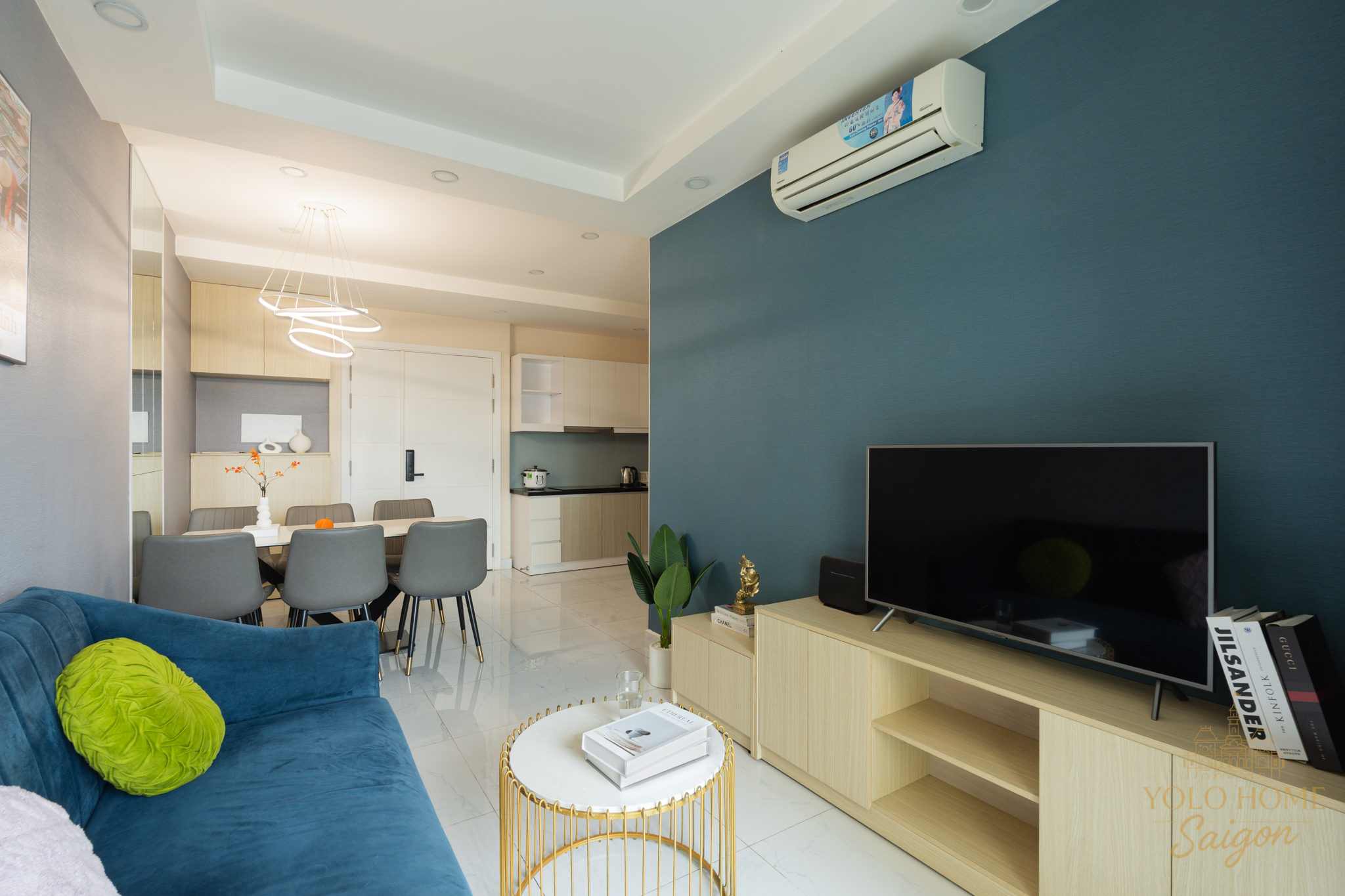
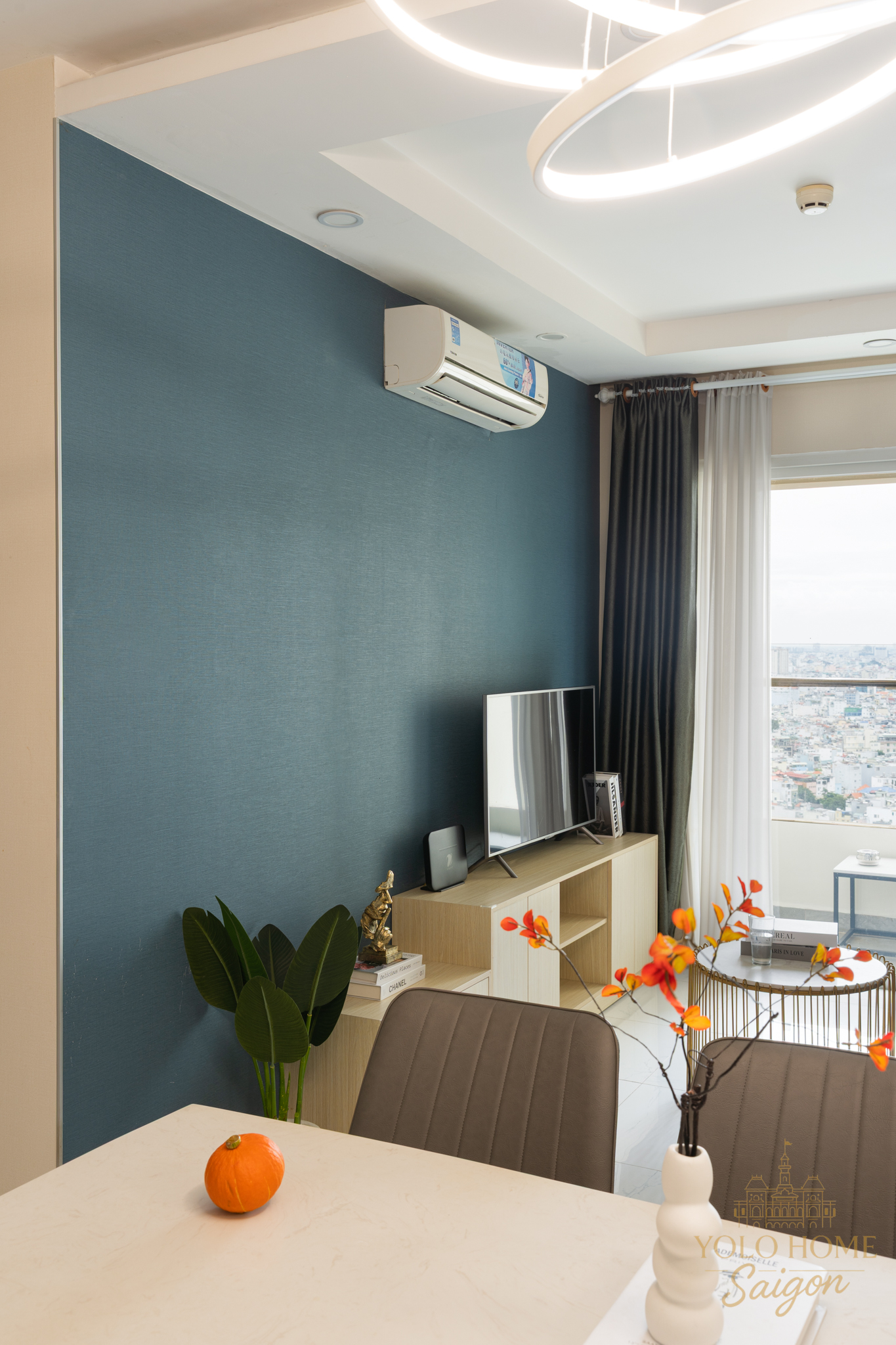
A proper District 3 serviced apartment should be fully furnished: bed, wardrobe, sofa, kitchen, refrigerator, washing machine and kitchenware. You only need to bring your suitcase. However, the quality of each appliance is what really makes the difference.
Test the air conditioning, water heater, stove and washing machine during the viewing. Check the water pressure and internet speed, as these two factors directly affect your daily work and life. A useful tip is to ask whether the apartment is equipped consistently to hotel standards, rather than with furniture sourced from many different places.
Shared facilities are just as important: gym, swimming pool, children’s play area and parking. Ask about opening hours and fees for each one. If you have a housekeeper or private driver, the building’s access policy should also be clarified from the start to avoid inconvenience later.
Once you have shortlisted a few apartments you like, compare them against the same set of criteria. This helps you see clearly which one offers better value instead of being distracted by each unit’s photos. A checklist is exactly the tool that makes the comparison objective and easy.
Concierge service and operating standards shape the experience
The biggest difference between an ordinary serviced apartment and a premium one lies in the services that come with it. Luva Travel runs a bilingual 24/7 concierge team, ready to handle personal and business requests within 60 minutes. This is the standard you should ask operators about when viewing apartments.
Ask about cleaning frequency, the linen change process and response times for issues such as water leaks or a broken air conditioner. A professional operator will have a housekeeping team on a fixed schedule and a maintenance team that resolves issues within a few hours, plus a quality check before each new guest checks in.
Concierge does not only handle requests inside the apartment but also supports your life outside it: restaurant reservations, car bookings, school advice, healthcare and administrative paperwork. For newly arrived professionals, the team acts like a friendly local, helping you settle into the city much faster.
You can see the full range of support on the Luva Travel concierge services page. When comparing apartments, check the scope of services written in the contract rather than relying on verbal promises, as this is where misunderstandings most often arise.
Contracts and costs for District 3 serviced apartments
The contract is the most important document in the entire rental process. Before signing, read the terms on minimum stay, cancellation policy, deposit and refund process carefully. Any verbal agreement should be written into the contract.
As for costs, the rent for a District 3 serviced apartment depends on the exact location, size, floor and service level, so there is no single figure that applies to all. Ask the operator to itemize every charge: rent, electricity and water, internet, regular cleaning, parking and any other fees.
Compare this list with the general cost of living in Ho Chi Minh City to judge whether the price is reasonable. One important point: ask about invoices for accounting purposes if you rent through a company, as many businesses require full invoices to reimburse employee housing costs.
Finally, do not be afraid to negotiate. For stays of several months or longer, many operators are willing to adjust terms to keep good tenants. If you need a more detailed guide to the monthly rental process, read our article on renting a serviced apartment by the month for the specific steps.
Security, safety and legal points to note
Security is a top concern for foreign professionals living in Ho Chi Minh City, especially those living alone or with a young family. A professional serviced apartment building usually has 24/7 security guards, a key card system, CCTV in the corridors and a clear visitor registration process.
Ask about these layers of protection before signing the contract, and check how close the building is to hospitals, pharmacies and the police station. For families with young children, details such as balcony locks, safe windows and furniture edges also deserve attention.
On the legal side, the lease should clearly state insurance responsibilities, damage compensation terms and the cancellation policy. For foreign guests, a reputable operator will help with temporary residence registration in line with regulations, sparing you unnecessary administrative trouble.
One often overlooked detail is fire safety. Check the fire extinguisher in the apartment, the emergency exits and the building’s evacuation procedure. Knowing this in advance gives you and your family more peace of mind throughout your stay in a District 3 serviced apartment.
How to view an apartment and check in properly
Once you have found a unit you like, schedule an in-person viewing of the exact floor and orientation you will live in. Do not view only the show unit, because sunlight, noise and views differ from one apartment to another. Check noise levels at rush hour and test the hot water, air conditioning and internet during the viewing.
At check-in, you should have a handover record noting the condition of the furniture, the electricity and water meter readings and a list of included appliances. Taking photos or a video of the apartment before moving in is your best protection at the end of the contract, avoiding disputes over damage you did not cause.
In the first few days, proactively contact the operations team to quickly check the main appliances and report any problems right away. This helps clearly separate pre-existing faults from those that arise during use, and builds a good line of communication with the support team.
If you need more advice on the check-in process or would like to book a viewing of a District 3 serviced apartment, the Luva Travel team is ready to help via the contact page or hotline. Careful preparation from the start will make your time in Ho Chi Minh City far more fulfilling.
Comparing District 3 serviced apartments with District 1 and Thu Thiem
To choose the right place, it helps to compare District 3 with other popular areas. Luva Travel currently operates apartments and villas in three main areas: District 1, District 3 and the Thu Thiem and Thao Dien area, each with its own character.
District 1 is the busiest commercial center, ideal for people who want to walk to work and enjoy an urban lifestyle. However, the density and noise can be a drawback for families with young children. Thu Thiem and Thao Dien are quieter, greener and close to international schools, making them a good fit for long-term expat families.
District 3 sits in the most balanced middle ground: close enough to the center for work convenience, yet still with quiet inner streets and a stable residential community. Many professionals choose this area because it offers quality restaurants and cafes without being as noisy as the center.
When comparing, make a list of your own priorities: distance to the office, schools, travel time to the airport, quietness and cost. Rents vary by district and size, so confirm directly with the operator to get the most accurate comparison at any given time.
If you are still torn between areas, spend a trial week staying a few nights in each before committing long term. Real experience is always more accurate than any theoretical review, and living there firsthand helps you understand the rhythm of each area over a full day.
Frequently asked questions about District 3 serviced apartments
How is a District 3 serviced apartment different from a regular rental apartment? A serviced apartment is fully furnished and comes with operating services such as cleaning, maintenance and concierge, while a regular rental is usually unfurnished or partly furnished and you arrange services yourself.
What is the minimum rental period? It depends on the operator, usually from one month. Luva Travel offers flexible weekly or monthly stays to suit your assignment schedule.
What does the rent include? It usually covers furniture, regular cleaning and maintenance. Electricity, water, internet and concierge services depend on each apartment’s policy and should be clearly listed in the contract.
Is it suitable for families with young children? Yes, because the apartments have a kitchen, separate bedrooms and generous living space. Many expat families choose District 3 for its proximity to international schools and the city center.
How can I be sure the price is reasonable? Ask for a full list of fees and compare it against the location, size and service level. Prices vary by district and size, so confirm directly with the operator.
Does the operator help with temporary residence registration? A reputable operator will help foreign guests register their temporary residence in line with regulations. You should confirm this service before signing the contract.
Information, prices and availability in this article may change. Please confirm directly with Luva Travel before booking.